
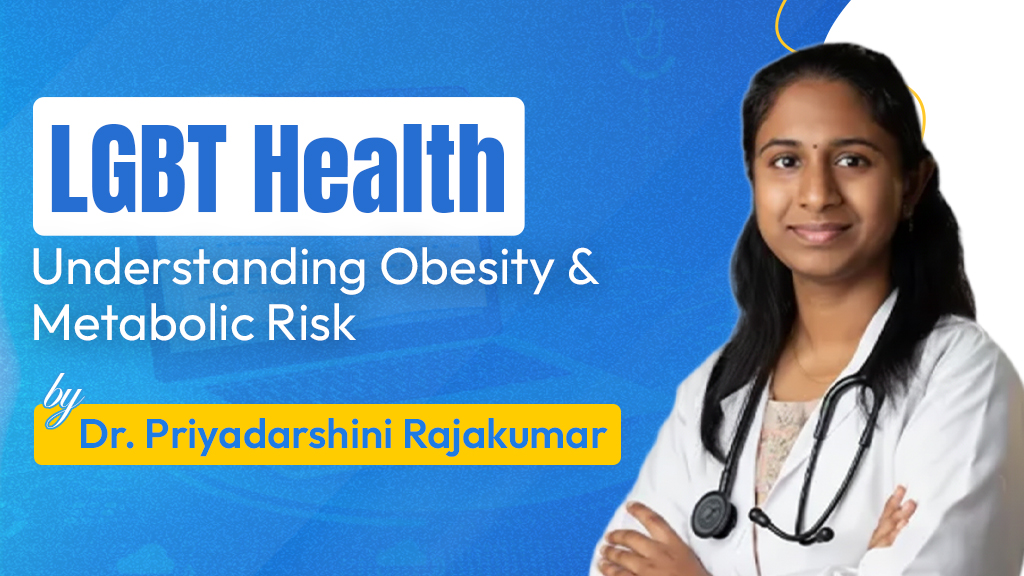
Obesity is no longer just a lifestyle issue — it is a complex medical condition driven by the brain, hormones, genetics, environment, and modern food habits. Among LGBT individuals, metabolic health deserves even more attention because stress, lifestyle changes, social factors, and healthcare access can further influence long-term outcomes.
In this session, Dr. Priyadarshini Rajakumar explains how obesity develops, why our brain tricks us into overeating, and how modern medicine is targeting appetite and metabolism at a hormonal level.
Why Do We Overeat Even When We’re Not Hungry?
Let’s start with a simple example.
If you eat an apple, you’ll usually feel full before finishing a second one. But if you eat three gulab jamuns, you’ll probably want more — even after consuming far more calories.
- One apple = 50–70 calories
- One gulab jamun = 150 calories
- Three gulab jamuns = 450+ calories
Yet your brain tells you to stop after the apple — and asks for more jamuns.
Why does this happen?
Because your brain responds to:
- Chewing
- Salivation
- Stomach expansion
- Fibre content
- Eating speed
An apple activates all these signals.
A gulab jamun melts in seconds and bypasses most of them.
This is how the brain gets tricked into overeating.
The Real Cause of Modern Obesity
Modern diets are filled with:
- Smoothies
- Juices
- Milkshakes
- Ice creams
- Biscuits
- Processed snacks
These foods:
- Require very little chewing
- Are calorie-dense
- Do not expand in the stomach
- Do not trigger satiety signals
As a result, the brain adapts to this pattern and starts considering it “normal”.
This leads to:
- Constant hunger
- Frequent snacking
- Delayed fullness
- Excess calorie intake
Distractions While Eating Make It Worse
Eating while:
- Watching TV
- Scrolling Instagram
- Using mobile phones
prevents your brain from recognising that you are eating. This leads to overeating and poor satiety control.
Cultural habits also contribute:
- Being encouraged to eat more
- Large portion sizes
- Social pressure during gatherings
All of this together fuels the obesity epidemic.
Obesity: An Alarming Trend
The numbers are worrying:
- Earlier: 1 in 4 people were obese
- Now: 1 in 2 people are overweight or obese
- Urban India: 77% obesity prevalence
- Rural India: Up to 80% overweight or obese
- Among doctors: 85% are overweight or obese
- Stress levels: 88% medical professionals are stressed
Obesity is no longer limited to cities or specific professions — it is everywhere.
The Brain, Hormones & Appetite Control
Your appetite is controlled by a powerful brain network involving:
- Leptin – signals fat storage and satiety
- POMC – produces appetite-suppressing hormones
- MC4R receptor – creates the feeling of fullness
- AgRP & Neuropeptide Y – increase hunger
When fat stores increase, leptin activates the satiety pathway and tells the brain to stop eating.
But when these pathways malfunction, obesity develops.
The Role of GLP-1: The Modern Breakthrough in Obesity Treatment
Today’s most effective obesity medications are based on GLP-1 (Glucagon Like Peptide-1).
GLP-1:
- Is released from the intestine
- Increases insulin secretion
- Suppresses glucagon
- Delays gastric emptying
- Reduces appetite
- Increases satiety
- Improves insulin sensitivity
- Reduces fat accumulation
This is why GLP-1 analogues are now used for:
- Obesity
- Diabetes
- Heart failure
- Metabolic syndrome
They act on the brain, pancreas, stomach, liver, heart and kidneys.
What Is GIP (Gastric Inhibitory Peptide)?
GIP works along with GLP-1 and:
- Enhances insulin secretion
- Acts on fat tissue
- Improves lipid metabolism
- Reduces inflammation
- Improves fat storage efficiency
Modern drugs now combine GLP-1 + GIP to create powerful appetite and weight-control medications.
Genetic Causes of Obesity
Not all obesity is lifestyle-related. Some people have monogenic obesity due to gene mutations.
Key genes involved:
- Leptin
- Leptin receptor
- POMC
- MC4R
- PC-1 enzyme
- SIM-1
- BDNF
When these are defective:
- Satiety signals fail
- Hunger remains constant
- Children develop severe obesity early in life
Some genetic syndromes include:
- Prader-Willi syndrome
- Bardet-Biedl syndrome
- Cohen syndrome
- Carpenter syndrome
- Albright hereditary osteodystrophy
In these conditions, obesity is part of a larger developmental disorder.
Obesity in Children: A Red Flag
Normally, obese children are taller due to insulin-driven growth.
But if a child is:
- Obese
- Short
- Has delayed puberty
- Has learning difficulties
Then doctors must evaluate for:
- Hormonal disorders
- Genetic syndromes
- Hypothyroidism
- Growth hormone deficiency
Obesity with short stature is never normal.
Why LGBT Health Needs Special Focus?
Members of the LGBT community often face:
- Chronic stress
- Mental health challenges
- Social stigma
- Poor access to preventive healthcare
All of these increase the risk of:
- Obesity
- Diabetes
- Heart disease
- Hormonal imbalance
Understanding metabolic health is essential for long-term wellbeing and quality of life.
Conclusion
Obesity is not just about willpower. It is a complex interaction between the brain, hormones, genes, lifestyle, culture, and environment. With rising obesity rates across India and the world, understanding the science behind appetite and metabolism is more important than ever.
For the LGBT community, prioritising metabolic health can significantly improve long-term outcomes and overall wellbeing.
As Dr. Priyadarshini Rajakumar highlights, modern medicine is now targeting obesity at its root — the brain-gut-hormone axis — offering hope for more effective and sustainable treatment.