
Issue, August, 2026
Newsletter
Conceptual Medicine Newsletter
Learn the Concept. Connect the Dots. Revise with Confidence.
Medicine becomes easier when you stop trying to remember every fact separately and start understanding how everything connects.
This August, Conceptual Medicine brings you upcoming Internal Medicine Notes along with focused, clinically relevant sessions on the app—designed to help Medicine residents learn concepts, consolidate lectures, revise efficiently and prepare smarter for exams.
COMING SOON: CONCEPTUAL MEDICINE BOOKS
“Students rarely struggle because the subject is vast. They struggle because it is taught as scattered facts rather than concepts. Once a concept becomes clear, recall becomes natural.”
That is the idea behind the upcoming Conceptual Medicine Books.
Compiled directly from Dr. Dilip Kumar’s Internal Medicine lectures, these books bring classroom teaching into a structured, concept-based format-so you can learn from the lecture, consolidate from the book and return to it when it is time to revise.
What’s Inside?
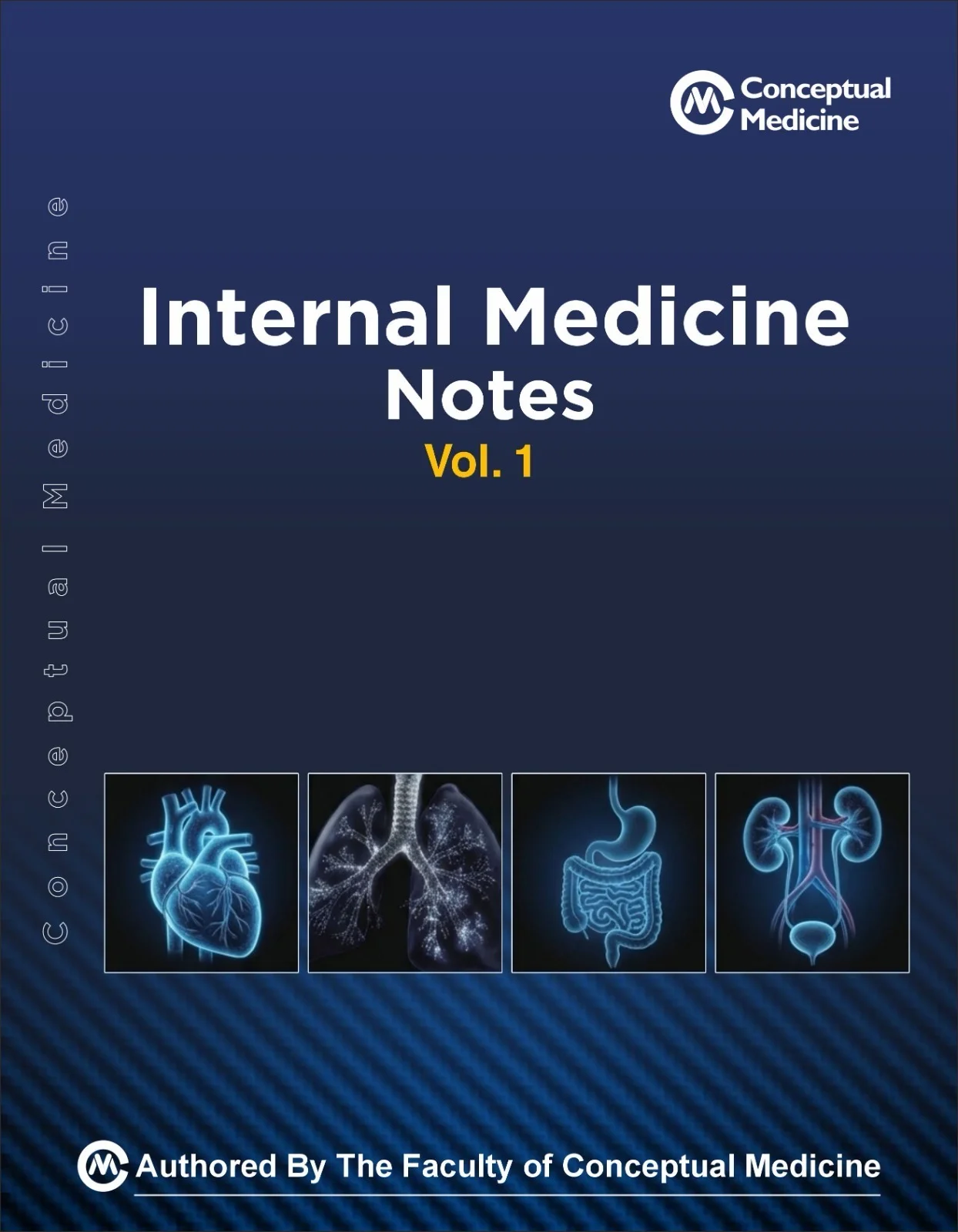
Internal Medicine Notes — Vol. 1
- Cardiology
- Pulmonary Medicine & Critical Care
- Gastrointestinal Medicine
- Nephrology
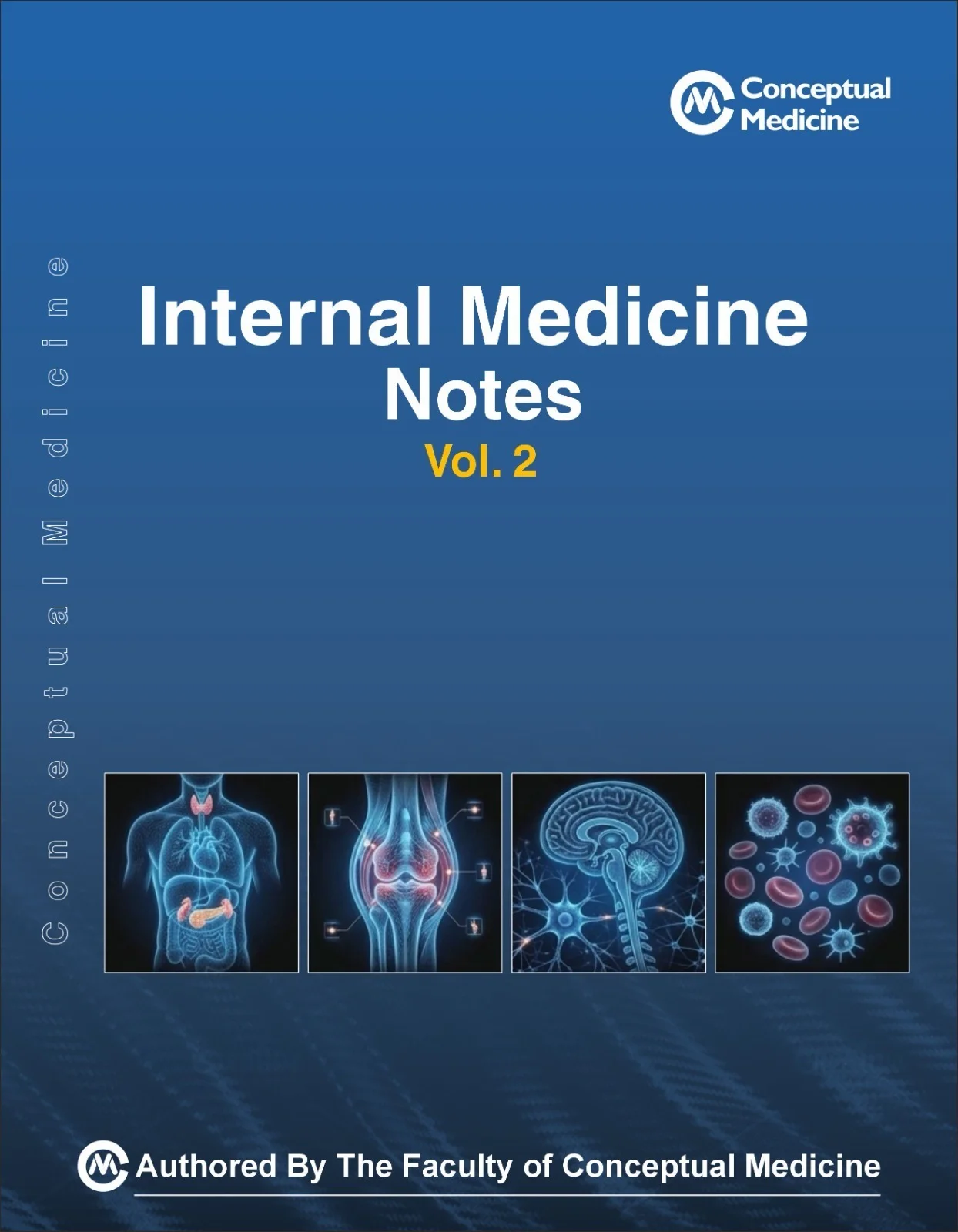
Internal Medicine Notes — Vol. 2
- Endocrinology
- Rheumatology
- Neurology
- Hemato-Oncology
Built for the Way Medicine Is Actually Studied
The books bring together:
- Lecture-aligned notes
- Concept-based explanations
- High-yield tables and comparisons
- Flowcharts and management algorithms
- Clinical images
- Space for personal annotations
- Practice MCQs with explanations
- Quick-revision-friendly content
The Simple Approach: Watch → Read → Revise → Test
Watch: Understand the topic through the lecture first.
Read: Consolidate the concept using the corresponding notes.
Revise: Use tables, algorithms and flowcharts for rapid recall.
Test: Attempt the MCQs and check your understanding.
The goal is not to add another book to your study table. It is to give you a structured resource that works alongside your lectures—during learning and again when revision begins.
THIS AUGUST ON THE CONCEPTUAL MEDICINE APP
Learning medicine is not only about completing more lectures. It is about finding the right concepts, understanding their clinical connections and revisiting them when they matter.
Here are three sessions to add to your August learning list.
01 | PRIMARY BILIARY CHOLANGITIS
Primary Biliary Cholangitis Explained | Diagnosis, Investigations & Treatment
Dr. Umalakshmi Premnath
PBC is an important topic for Medicine exams and clinical practice. This session takes you through the disease from clinical presentation and diagnosis to treatment, while also connecting it with important biliary differentials.
What You’ll Cover
- Primary Biliary Cholangitis
- Autoimmune liver disease
- Anti-Mitochondrial Antibody (AMA)
- Clinical features
- Liver biopsy findings
- Diagnosis and investigations
- UDCA therapy
- Obeticholic acid indications
- Secondary biliary cirrhosis
- IgG4-related biliary disease
- Benign vs malignant biliary strictures
- ERCP, MRCP & PTC
- Endoscopic Ultrasound
⭐ Key Highlight
Don’t study PBC as an isolated diagnosis. Connect the clinical picture with AMA, investigations, treatment and important biliary differentials to make the topic easier to recall and apply.
02 | KIDNEY TRANSPLANTATION
Kidney Transplantation Explained | Transplant Immunology & Graft Rejection
Dr. Sukanya Govindan
Kidney transplantation brings together nephrology, immunology and clinical decision-making. Understanding the mechanism behind graft rejection can make this topic much easier to approach during revision.
⭐ Key Highlight
Focus on the immunological basis of transplantation and graft rejection, rather than memorising rejection as disconnected facts.
A useful session for Medicine residents and aspirants building stronger nephrology and transplant concepts.
03 | SKIN & SOFT TISSUE INFECTIONS
SSTIs Explained | Erysipelas vs Cellulitis | Diagnosis & Treatment
Dr. Dilip Kumar
SSTIs are common in clinical practice and frequently tested in postgraduate examinations. This session makes the distinction between Erysipelas and Cellulitis easier to understand while connecting organisms, risk factors, clinical features and treatment.
What You’ll Cover
- Skin & Soft Tissue Infections
- Erysipelas vs Cellulitis
- Group A Streptococcus & Staphylococcus aureus
- MRSA risk factors
- Clinical features and diagnosis
- Diabetes as a major risk factor
- Oral vs IV antibiotic therapy
- MSSA vs MRSA management
- Antibiotic duration
- Current clinical recommendations
- High-yield exam points
⭐ Key Highlight
Use a simple clinical framework:
Type of infection → Likely organism → Risk factors → Severity → Appropriate treatment
Understanding this sequence makes SSTIs easier to remember and more useful in clinical practice.
AUGUST QUICK REVISION: KEY HIGHLIGHTS
Session | Key Concept to Take Away |
Primary Biliary Cholangitis | Connect the clinical pattern with AMA, diagnosis, treatment and biliary differentials. |
Kidney Transplantation | Understand transplant immunology and the mechanism of graft rejection. |
SSTIs | Differentiate Erysipelas vs Cellulitis, then connect organism, risk factors and treatment. |
KEEP LEARNING WITH CONCEPTUAL MEDICINE
Your Medicine preparation becomes more manageable when learning, revision and clinical understanding work together.
With concept-based lectures on the app and the upcoming Internal Medicine Notes, you can build a study system that helps you:
Understand → Consolidate → Revise → Recall → Apply
Whether you’re preparing for MD/DNB, NEET SS or INI SS, make your Medicine preparation more than a race to finish the syllabus.
Learn the Concept. Understand the Connection. Remember It When It Matters.
📲 Explore Conceptual Medicine on the eConceptual app and continue your learning journey.
And stay tuned for the upcoming Internal Medicine Notes — Vol. 1 & Vol. 2.